
Our current initiatives
Soft Plastic Recycling
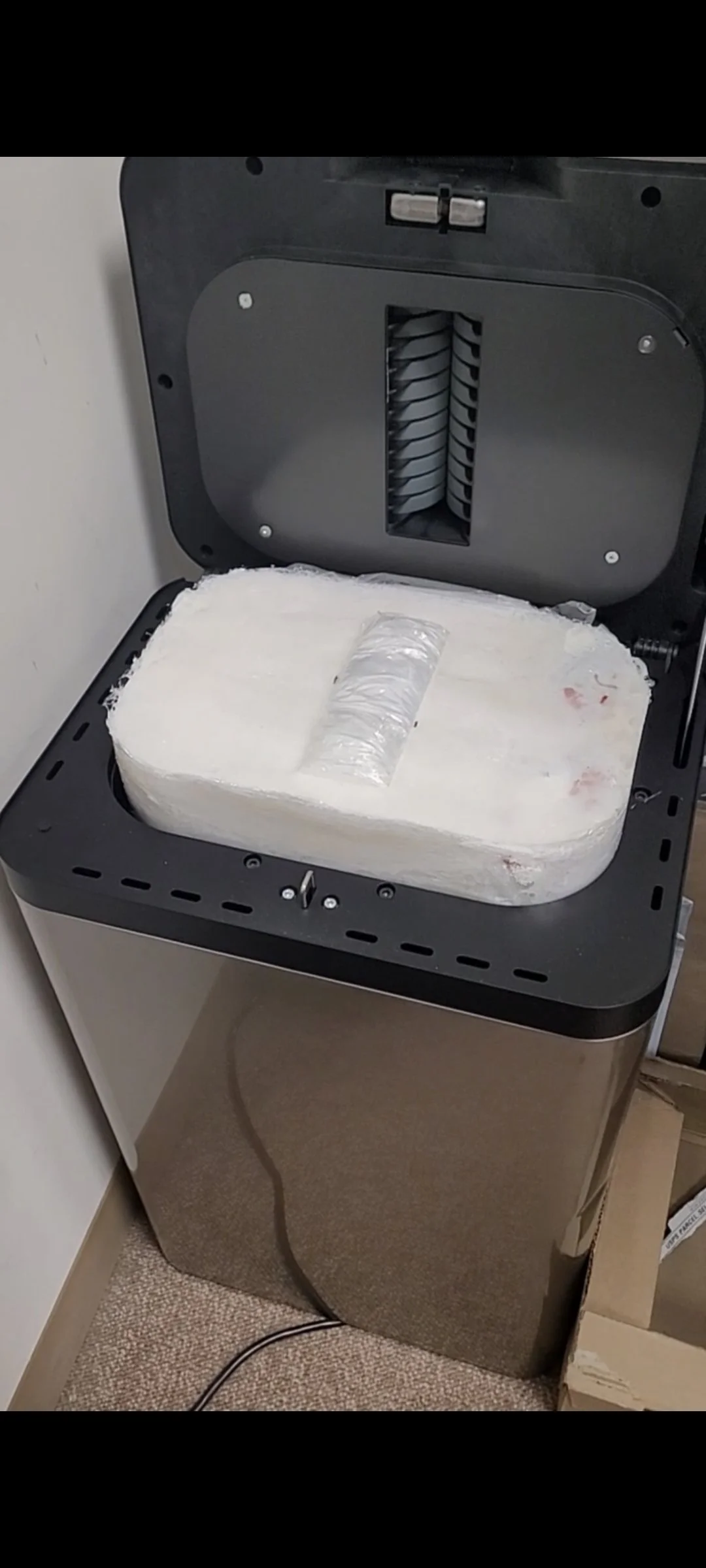
In collaboration with Pitt Sustainability, we have been piloting a soft plastic recycling program within BST and BST3! Any clean plastic bags, films, or packaging that are stretchy (usually #2 and #4 plastics) can be recycled in one of the drop off locations (see the Recycling Resources page for details). These plastics are collected and fed into a compactor which melts them down and compresses them into bricks! These bricks are then collected by Pitt Surplus and recycled by third parties.
If you work within the BST complex (including BST South, Scaife, Eye and Ear Institute, Victoria, and Presby) and would like to set up a collection bin for soft plastic recycling in your floor/building, reach out to Nathan (nas290@pitt.edu). We are constantly expanding our collection drop off locations!
Green Labs Promotion
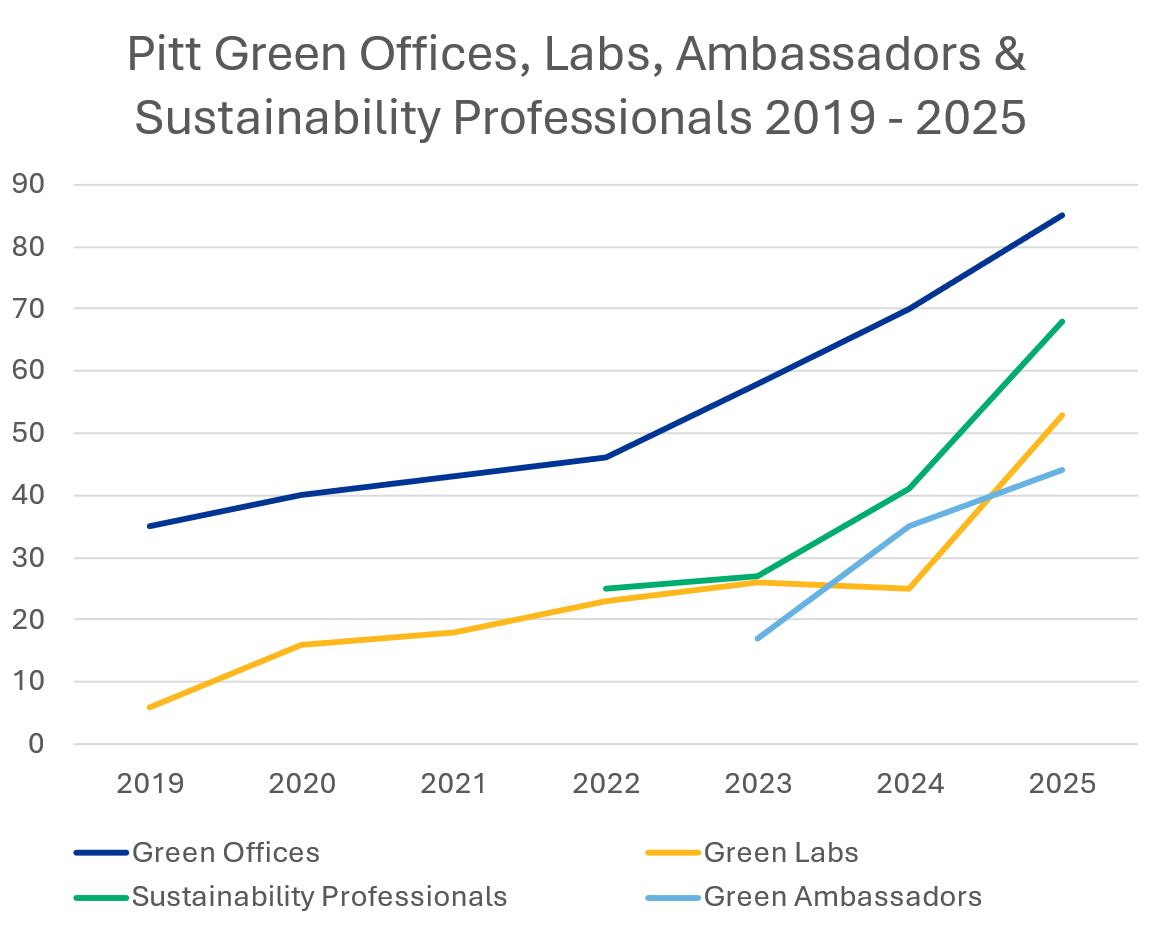
We encourage all research spaces to help advance the University of Pittsburgh’s culture of sustainability by becoming a Pitt Green Laboratory. From 2024 to 2025, the number of Green Labs more than doubled from 26 to 54! We hope to continue that momentum by informing people of this program through flyers and tabling events. See the full list of registered labs here:
https://www.sustainable.pitt.edu/get-involved/pitt-green-designations/green-labs-designations
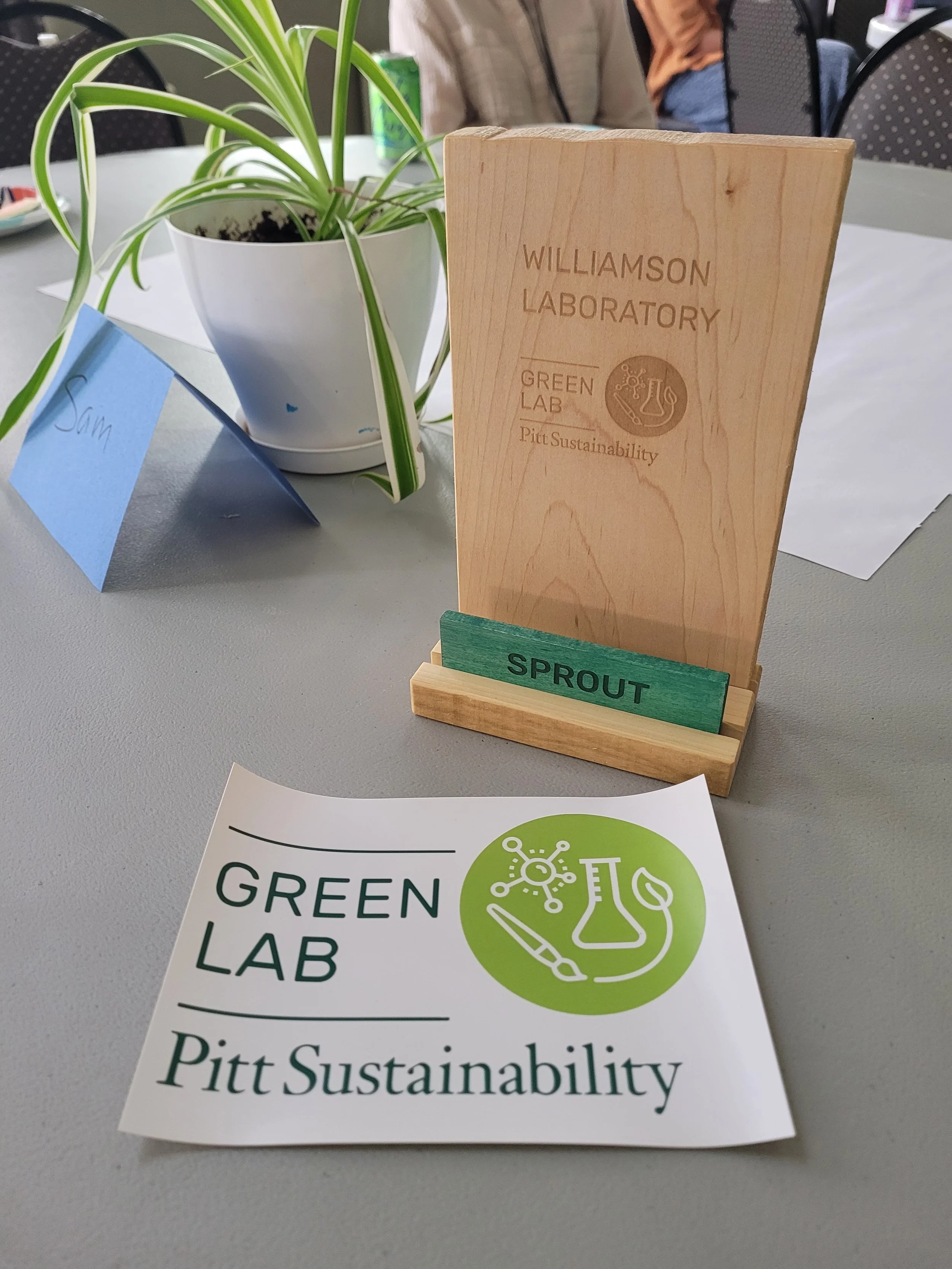
To become a Pitt Green Lab, your laboratory must complete a Self-Assessment Survey with the assistance of your PI that evaluates your lab across 8 different areas. After completing the self-assessment, your laboratory will earn 1 of 4 Pitt Green Laboratory designations to celebrate your determination in helping make our campus a more sustainable place inside and out. New Green Labs are recognized with a sticker and an engraved wooden plaque at the annual Green Suites Celebration and are added to the list of Green Labs! You can get more information or become a Green Lab here: https://www.sustainable.pitt.edu/get-involved/employee-opportunities/pitt-green-labs
Collaboration with DLAR
We have been working with the Division of Laboratory Animal Resources (DLAR) at Pitt to reduce the environmental impact of our animal facilities. These initiatives include:
Composting used food and bedding in Bridgeside Point II.
Recycling soft plastics from PPE packaging in BST and BST3.
Replacing single-use plastics with reusable or compostable alternatives.
Submit Your Ideas!
Do you have an idea of how to make the BGSA or research at Pitt more sustainable? Send us a message!